Cupping for Back Pain: Where It Helps and Where to See a Doctor
Back pain is the reason most people ask about cupping in the first place. A tight lower back after a long drive on Route 80, a knot between the shoulder blades from a week at a desk, a stiff mid back after a double shift on your feet. The cups go on, the pull starts, and the question is whether it will actually help.
The direct answer: cupping can help with the muscular kind of back pain, the kind that comes from tight tissue and poor circulation, and many people feel looser after a session. It does not fix a disc, a nerve problem or anything structural, and some back pain needs a doctor before it needs a cup. This guide covers how cupping works on the back, where the cups go, what to expect after, and the specific symptoms that mean you should skip the spa and make a medical appointment instead.
What cupping does for a tight back
Cupping is suction therapy. A cup placed on the skin creates a vacuum that lifts the skin and the fascia beneath it, the thin sheet of connective tissue that wraps every muscle. That lift pulls fresh blood into the area and gives tissue that has been clamped down for weeks some room to move. For a back that is tight from sitting, driving or standing, that is often exactly what is needed.
Cupping as 205 Spa offers it works on that principle: lift tight fascia, boost circulation, and let the muscle underneath relax. The cupping therapy service is one of the 14 on the menu, and it is most often used on the back, where the muscle is thick enough to tolerate firm suction and the fascia tends to bind up the most.
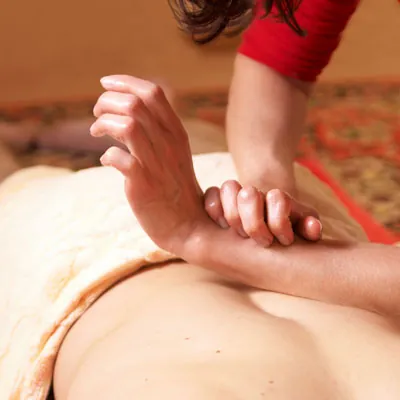
Hands on massage presses tissue down. Cupping pulls it up. That difference is why people who have had plenty of deep tissue work sometimes find cupping reaches a layer the fingers did not. It is not stronger, just a different direction, and the two are often used together in the same session.
Which kinds of back pain respond, and which do not
Cupping suits muscular back pain. It is not a treatment for structural or nerve related pain, and knowing the difference matters more than any technique. The split below is general guidance, not a diagnosis, and when in doubt the answer is always a doctor first.
Pain that tends to respond
- A dull ache across the lower back after sitting or driving
- Stiffness between the shoulder blades from desk work
- Tightness on one side from carrying a bag or a child on the same hip
- General soreness after a long shift standing or lifting
- Muscle tension that eases with heat, stretching or a hot shower
Pain that needs a doctor, not a cup
- Pain that shoots down one or both legs, or numbness and tingling in the legs or feet
- Weakness in a leg or foot, or trouble controlling the bladder or bowel
- Pain after a fall, a car accident or a lifting injury that felt like something gave way
- Pain with fever, unexplained weight loss or that wakes you at night
- Back pain alongside a history of cancer, osteoporosis or long term steroid use
Published research on cupping for low back pain is mixed. Some small studies report short term relief for chronic low back pain, while reviews note the evidence is low quality and more work is needed. The honest summary is that many people find it helps them feel better for a while, and that it should sit alongside medical care for anything beyond muscle tightness, not replace it.
Where the cups go for lower back pain
For the lower back, cups usually sit on the thick bands of muscle either side of the spine, never directly on the bone. The therapist may add cups higher up on the mid back or lower on the top of the glutes, since lower back tightness often starts in the hips.
Placement follows the pain and the tissue, not a fixed chart. A session typically starts with the therapist feeling along the back to find the tight ropes of muscle, then placing cups where the tissue is most bound. Three to six cups is a common number for a lower back. Each cup stays on for a few minutes, or glides along the muscle with oil if the therapist is using the moving style, which leaves a flush rather than rings.
Many people pair cupping with deep tissue massage on the same visit, using the cups first to lift and loosen the fascia and then working the muscle by hand. The session at 205 Spa opens with a short conversation about sore spots, injuries and pressure, and that is where you tell the therapist where it hurts and how much pull you want.
What a cupping session for back pain feels like
The pull is the first sensation. When the cup goes on, the skin is drawn up into it and you feel a firm, tight tug, strong but not sharp. Within a minute most people describe it as warmth or pressure rather than pull. The post on whether cupping hurts covers the sensation in detail. The short version is that it should never be painful, and you can ask for less suction at any point.
Here is the usual shape of a back session.
- Minutes 0 to 5. The conversation about sore spots and pressure, then you lie face down on the table with draping.
- Minutes 5 to 10. The therapist warms the back with hands or oil and finds the tight areas.
- Minutes 10 to 25. Cups go on, either held in place for several minutes each or moved along the muscle.
- Minutes 25 onward. Cups come off and the therapist works the loosened tissue by hand, or moves on to whatever bodywork you booked.
- After. Time to rest and rehydrate before you head out.
Those timings are typical of how a session unfolds, not a fixed menu. The therapist adjusts the number of cups and the time they stay on to your skin and your tolerance.
What to expect after, and how to help it along
Expect round marks on the back, from pink to purple, that fade over a few days to two weeks. Expect the area to feel warm and loose, and sometimes a little tender the next day, like the mild soreness after a good workout. Many people sleep well the night of a session.
A few habits help the back hold the gains.
- Drink water the rest of the day. The therapists at 205 Spa build rest and rehydration into the end of every session for this reason.
- Keep moving. A short walk or gentle stretching the same evening keeps the loosened tissue from tightening straight back up.
- Use warmth, not ice, on the marks. A warm shower or a heating pad on low is fine.
- Skip the heavy lifting and the hard gym session for a day.
- Leave the marks alone. They fade on their own, and the guide to how long cupping marks last explains the timeline.
If the back feels better for a few days and then tightens again, that is normal for a muscle that has been bound up for months. A short run of sessions a week or two apart, then a longer gap, is the usual pattern. If three sessions change nothing, that is useful information too, and worth taking to a doctor.
Who should skip cupping on the back
Cupping is gentle for most healthy adults, but because it draws blood to the surface, a few groups should check with a doctor first. As general guidance, ask before booking if you are pregnant, if you take blood thinners, or if you have a skin condition such as eczema or psoriasis on the back.
The same caution applies to anyone with a bleeding disorder, open cuts or sunburn on the area, varicose veins where the cups would sit, recent back surgery, or very fragile skin. People with the red flag symptoms listed earlier, leg weakness, numbness, bladder changes, fever or pain after an injury, should see a doctor before any spa treatment. Cupping is not a substitute for finding out what is wrong.
Mention any of this during the conversation at the start of the session. The therapists are licensed and would rather adjust the plan than guess.
Cupping for a commuter's back at 205 Spa
Most of the backs that come through 205 Spa belong to people who drive. Saddle Brook sits where Route 80, Route 17 and Route 46 meet, minutes from the Garden State Parkway, and an hour each way in that traffic does to a lower back exactly what you would expect. Cupping is a fast way to get at the tissue that sitting has locked down, especially paired with hands on work from the services menu.
The hours fit the problem. The spa is open every day from 9 AM to 11 PM, so a session can go after the evening commute rather than instead of it. NJ Transit routes 707 and 712 stop along Market Street, including at Market Street and Midland Avenue, and routes 164 and 707 stop along Saddle River Road, for anyone who would rather not drive on a sore back at all. Private treatment rooms, fresh linens and no memberships keep it simple: come in, say where it hurts, and leave looser.
Visit 205 Spa in Saddle Brook
205 Spa is at 205 N 6th St in Saddle Brook, between Midland Avenue and Market Street. It is open every day from 9 AM to 11 PM. Walk ins are welcome, or call 201-368-5244 to hold a room. There is free parking on site. The full list of services shows what pairs with cupping for a tight back, and the therapist will build the session around where it hurts.
Questions readers ask
Can cupping make back pain worse?
On muscular tightness it rarely does, though the back can feel tender for a day, like after a workout. If pain gets sharper or spreads after a session, stop and see a doctor, since that points to something cupping was never going to fix.
Is cupping or massage better for lower back pain?
They do different things. Massage presses tissue down and works the muscle; cupping lifts the fascia and pulls blood in. Many people with a tight lower back get the best result from both in one session, cups first and hands after.
How many cupping sessions does a tight back usually need?
A fair trial is three sessions spaced a week or two apart. Many people feel looser after the first. If three sessions change nothing, that is a sign to take the problem to a doctor.
Can cupping help sciatica?
Cupping may ease the tight muscles around the hip and lower back that sometimes go with sciatica, but it does not treat the nerve itself. Shooting leg pain, numbness or weakness should be checked by a doctor before any spa treatment.