Infrared vs Steam Sauna: What a Spa Steam Room Does Differently
Infrared saunas have shown up in gyms, wellness studios and basements across Bergen County in the last few years, and they come with big claims. Deeper heat, more sweat, more detox, less time. Then you visit a massage spa and find a tiled room full of warm fog instead. Which one is actually doing more for you?
The direct answer: an infrared sauna warms your body directly with infrared light in dry, mild air, while a steam sauna fills a sealed tiled room with water vapor and warms you through the air itself. Infrared is gentler and longer. Steam is wetter, faster and better for the skin and the breathing, which is why massage spas like 205 Spa use steam before bodywork rather than an infrared cabin. This guide covers how each one works, how they compare on temperature, time and feel, which health claims hold up, and what a spa steam room does that a home infrared cabin cannot.
The short answer: light versus vapor
The two rooms heat you in different ways. An infrared sauna uses panels that emit infrared light, which passes through the air without warming it much and is absorbed by the skin. The air in the cabin stays at a mild 120 to 140 degrees Fahrenheit, and the body warms from the light directly. A steam sauna uses a generator to push water vapor into a sealed room until the air is near 100 percent humidity at about 110 to 120 degrees, and the body warms because it is sitting in hot, wet air.
That difference changes everything downstream. Infrared is dry and mild, so sessions run long, often 20 to 30 minutes, and the skin finishes dry. Steam is wet and feels hotter than its thermometer, so sessions run 10 to 15 minutes and the skin finishes soft and hydrated. For a session on its own at home, either can be pleasant. For a warm up before a massage or a table shower, steam wins, and the rest of this guide explains why.
205 Spa has a steam sauna as one of its 14 services, and it is used the way the later sections describe: ten or fifteen minutes before the table shower and the massage.
How a steam sauna works
A steam sauna is a sealed room, fully tiled or stone lined, with a steam generator outside it. The generator boils water and pipes the vapor in through a vent until the air is saturated. Because the air holds all the water it can, sweat on the skin cannot evaporate, and the body loses its main way of cooling itself. That is why a steam room at 115 degrees feels hotter than a dry sauna at 170.
The humidity is the feature, not a side effect. Warm, saturated air settles on the skin and softens its outer layer. It eases the airways, which is why people with a stuffy head often go to the steam room first. It also carries heat into the muscle quickly, so ten minutes of steam does the warm up work that would take longer in a dry cabin.
Steam rooms are the Turkish and Roman bath tradition, and they belong in spas that do bodywork because of what they do to skin and muscle in a short time. They need a tiled, drainable space and a generator, which is why you find them in commercial spas far more often than in homes.
How an infrared sauna works
An infrared sauna is usually a wood cabin lined with heating panels. The panels emit infrared light, mostly in the far infrared range, which the skin absorbs as heat. The air itself is barely warmed, so the cabin runs at 120 to 140 degrees and feels mild when you step in. The body warms up over several minutes as the light does its work, and sweating usually starts later than it would in a steam room.
Because the air is mild and dry, people stay longer, commonly 20 to 30 minutes, and the experience is quieter and less intense. Infrared cabins plug into a normal outlet, warm up in ten minutes or so, and need no plumbing, which is why they have spread through homes, gyms and wellness studios. The trade off is that the dry air leaves skin dry, the mild heat takes time to reach deep tissue, and there is no humidity to help the breathing.
Marketing for infrared often claims the light penetrates deeper than steam heat and sweats out more toxins. The penetration claim is partly true, since infrared is absorbed a few millimeters into the skin rather than only at the surface. The detox claim is not, and the section on health claims below sorts it out.
Infrared vs steam, side by side
Here are the two rooms on the measures that matter for a spa visit, using typical figures for each type rather than any one brand or building.
| Measure | Infrared sauna | Steam sauna |
|---|---|---|
| How it heats | Infrared light absorbed by the skin | Hot water vapor in the air |
| Air temperature | 120 to 140 F | 110 to 120 F |
| Humidity | Low, dry air | Near 100 percent |
| Warm up time for the room | About 10 minutes | 10 to 20 minutes |
| Usual session | 20 to 30 minutes | 10 to 15 minutes |
| How it feels | Mild, dry, slow to build | Wet, enveloping, quick to build |
| Effect on skin | Dries | Softens and hydrates |
| Effect on breathing | Neutral | Eases congestion |
| Where you find it | Homes, gyms, wellness studios | Massage spas, bathhouses, hotels |
| Best use | Long quiet sessions on their own | Warm up before a massage or table shower |
The calorie question comes up with both rooms, and the answer is the same for each: a small bump over sitting still, with the weight lost being water. The post on whether a sauna burns calories runs the numbers. Pick the room for how it feels and what comes after it, not for the scale.
Which health claims hold up
Both types attract claims, and infrared attracts more because it is newer and sold harder. Here is an honest sort, with the usual caution that published research on saunas is thinner than the marketing suggests and that none of this is medical advice.
Relaxation and sleep
Well supported for both. Heat raises the heart rate, then it drops below baseline afterward, and many people sleep better that night. This is the benefit most spa visitors actually notice.
Muscle stiffness and recovery
Reasonably supported for both. Warm tissue moves more freely, and studies on post exercise heat report less perceived soreness. Steam gets there faster because wet heat transfers more quickly; infrared gets there with a longer session.
Skin
Steam has the edge, and it is not close. Humid air softens and hydrates the skin, which is why steam pairs with exfoliation. Infrared dries the skin, and people with dry skin or eczema often find it uncomfortable.
Breathing
Steam again. Warm moist air eases congestion for a while. Infrared does nothing in particular for the airways.
Heart health
The long term data comes from Finnish population studies of dry saunas, not from either steam or infrared. Those studies are observational and encouraging, but they do not transfer directly. Small infrared studies on heart failure patients exist and are interesting, but they are small.
Detox
Not supported for either. Sweat is mostly water and salt. The liver and kidneys handle toxins, and no sauna changes that. Claims that infrared sweat carries more toxins rest on tiny samples and have not held up.
Weight loss
Not supported for either, beyond water weight that returns with the next drink.
What a spa steam room does that a cabin cannot
A steam room in a massage spa is not a standalone product. It is the first step in a sequence, and the sequence is the point. The steam softens skin and warms muscle, the table shower rinses and exfoliates, and the massage works tissue that is already loose. An infrared cabin at home does the first job slowly and the other two not at all.
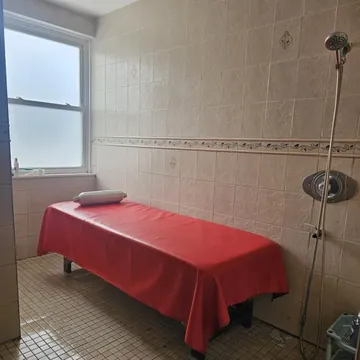
At 205 Spa the second step is the house signature, the table shower. You rest on a padded table in a fully tiled private room while warm water falls over you and the therapist works an exfoliating cloth across your back, legs and shoulders before you turn over. Skin that has spent ten minutes in steam gives up far more to that cloth than dry skin does. Then the massage follows, with the therapist starting on warm tissue instead of spending the first ten minutes getting it there.
The other thing a spa steam room offers is that someone else runs it. Private treatment rooms, fresh linens, a short conversation at the start about sore spots and pressure, and time to rest and rehydrate at the end. Nobody at home is handing you water and telling you to sit for five minutes before you lie down, and that small structure is a large part of why a spa visit feels different from a cabin in the basement.
Which to choose for your goal, and who should be careful
If you own an infrared cabin or your gym has one, use it. It is a pleasant, low intensity heat and a fine way to spend 25 quiet minutes. The choice only matters when you are deciding what to do before a massage or what kind of heat suits a particular need. Here is the short version by goal.
- Before a massage or table shower: steam. Faster warm up, hydrated skin, settled breathing, and the session fits in 10 to 15 minutes.
- Congestion or a tight chest: steam. The moisture is what helps.
- Dry skin or eczema: steam, with a short session. Infrared tends to make dry skin worse.
- A long, quiet, low intensity session at home: infrared. Nobody fits a steam generator in an apartment.
- Heat sensitivity or a first ever heat session: either, kept short. Infrared feels milder on entry; steam is shorter overall.
- Weight loss or detox: neither. Use the gym and the kitchen.
Whichever you choose, the same precautions apply. As general guidance, ask a doctor before using any sauna if you have heart disease, uncontrolled high blood pressure, low blood pressure that makes you faint, or if you are pregnant. Skip heat after alcohol, with a fever, when dehydrated, or with open wounds or an active skin infection. Leave at the first sign of dizziness or nausea, drink water, and do not go back in. The post on steam sauna vs dry sauna covers the third type of heat room with the same cautions.
Using the steam sauna at 205 Spa
The steam sauna at 205 Spa is one of 14 services, and the usual way to use it is as the first ten or fifteen minutes of a longer visit. Say at check in that you want steam first, and the sequence runs like this.
- A short conversation about sore spots, injuries and pressure.
- Steam sauna for 10 to 15 minutes, leaving sooner if you feel lightheaded.
- Water and a 5 minute cool down.
- Table shower, rinsing and exfoliating skin the steam has softened.
- Massage, from the full list of services, on tissue that is already warm.
- Rest and rehydrate before heading out.

The spa is open every day from 9 AM to 11 PM, which leaves room for the full sequence after work for anyone coming off Route 80, Route 17 or Route 46, and in the morning for shift workers heading home. Walk ins are welcome, and calling ahead holds a room if you want the timing locked in. There are no memberships, so the steam room is there whenever you want it and not a monthly fee the rest of the time.
Visit 205 Spa in Saddle Brook
205 Spa is at 205 N 6th St in Saddle Brook, between Midland Avenue and Market Street, close to where Route 80, Route 17 and Route 46 meet. It is open every day from 9 AM to 11 PM. Walk ins are welcome, or call 201-368-5244 to hold a room. There is free parking on site. The services page lists the steam sauna, the table shower and every massage that follows them.
Questions readers ask
Is infrared or steam better for sore muscles?
Both warm the tissue and ease stiffness. Steam does it faster in a shorter session; infrared does it more slowly over a longer one. Before a massage, steam is the better warm up because the massage finishes the job.
Why do spas use steam rooms instead of infrared cabins?
Steam softens skin and warms muscle in ten minutes, which sets up exfoliation and massage. It also needs a tiled, drainable room and a generator, which spas have and most homes do not.
Does an infrared sauna sweat out more toxins than steam?
No. Sweat is mostly water and salt in either room, and the liver and kidneys do the actual work of clearing toxins. The claim rests on very small studies and is not supported.
Can I use an infrared sauna at home and still get steam at the spa?
Yes, and many people do. Infrared at home is a quiet evening habit; steam at the spa is a warm up for the table shower and massage. They do different jobs, and neither replaces the other.