What Deep Tissue Massage Is and How It Differs From Just Pressing Harder
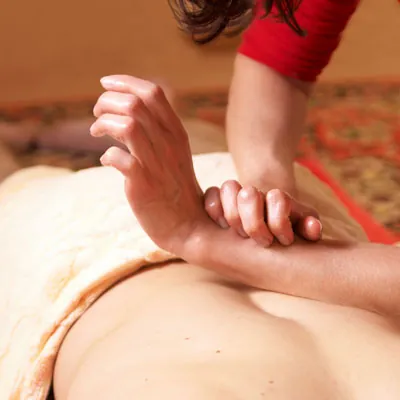
A deep tissue massage is a massage that works the deeper layers of muscle and the connective tissue around them, using slow strokes and sustained pressure aimed at specific tight spots. It is the most requested massage at 205 Spa in Saddle Brook, and the most misunderstood, because a lot of people think it just means a Swedish massage with the pressure turned up.
The direct answer: deep tissue is about where the pressure goes and how slowly it gets there, not how hard the therapist pushes. The therapist warms the surface, then sinks into one layer at a time, following the grain of the muscle until a knot lets go. This guide covers what that feels like, how the session runs at 205 Spa, what research suggests it helps with, who should check with a doctor first, why you may be sore the next day, and how it compares with Swedish and sports massage.
What deep tissue is, and what it is not
Deep tissue massage is slow, layered and specific. Slow, because deep muscle does not release under a fast stroke; the therapist moves at a pace that lets the tissue soften ahead of the hand. Layered, because the surface muscle has to relax before the one underneath can be reached, so each area is worked from the top down. Specific, because the goal is a particular band of tight muscle or a particular knot, not a general rub.
What it is not is maximum pressure everywhere. A therapist who presses as hard as possible from the first minute will make you brace, and a braced muscle cannot be worked. Good deep tissue often feels less forceful than people expect, right up until the therapist finds the spot, where it feels intense and very accurate. If you have left a massage feeling beaten up with nothing actually released, you had hard pressure, not deep tissue.
The techniques
- Stripping: slow, deep strokes along the length of a muscle fiber, often with the forearm, knuckles or thumbs.
- Friction: short strokes across the grain of the muscle to break up adhesions where fibers have stuck together.
- Sustained pressure: holding a knot with a thumb or elbow for several seconds until it softens.
- Fascia work: slow stretching of the connective sheet that wraps muscles, with little or no oil so the hands grip rather than glide.
What to expect at 205 Spa
A deep tissue session at 205 Spa starts with a short conversation about sore spots, injuries and the pressure you like. That conversation matters more here than for any other massage, because the therapist is going to spend time on the areas you name. You undress to your comfort level, lie on the table under draping in a private room with fresh linens, and the therapist starts with lighter strokes to warm the muscle before going deeper.
- Conversation: where it hurts, how long it has hurt, what you do for work, anything to avoid.
- Warm up: several minutes of broad, lighter strokes with oil on the back and shoulders.
- Deep work: slow strokes and sustained pressure on the areas you named, with a pressure check in whenever the therapist moves to a new area.
- Breathing: when a knot is held you will be asked to breathe out slowly. The muscle releases on the exhale.
- Closing strokes: lighter work to settle the area, then the other side or the legs.
- Rest and rehydrate before you drive, with the option of a table shower after to rinse off the oil.
You will be asked about pressure more than once. Answer honestly. Deep tissue should sit around a seven out of ten on a discomfort scale at its most intense, and never at a level that makes you hold your breath or tense against the hand.
Benefits, with what the research says
The clearest benefit is relief from chronic muscle tension, the kind that builds from months of driving, desk work or lifting. The evidence for massage and pain is moderate. A 2016 review in Pain Medicine that pooled randomized trials found massage therapy improved pain and function in people with musculoskeletal pain compared with no treatment or usual care, while noting that study quality varied. The American College of Physicians 2017 guideline for low back pain lists massage among the first options to try for acute and subacute low back pain before medication.
Beyond pain, many people find deep tissue improves how far they can turn their neck or reach overhead, because tight fascia limits range of motion. Studies suggest massage can lower perceived stress and help with sleep in the short term, though the effect size varies. What the research does not support is any claim that deep tissue breaks up scar tissue permanently, flushes toxins or replaces physical therapy for an injury. Treat it as effective maintenance for a working body, and see a doctor for pain that is sharp, new or getting worse. The full body massage page explains how the spa approaches every session.
For athletes and shift workers
Deep tissue serves two groups well in Bergen County: people who train and people who work on their feet. For athletes, the use is between hard efforts rather than right before one. Lifters book it for tight hips and upper backs, runners for calves and the band along the outside of the thigh, and weekend league players for whatever Sunday left behind. Give it a day or two before a race or a heavy session, since the muscle can feel flat for a day after deep work.
Shift workers have a different problem: the same posture for twelve hours. Nurses from the hospitals around Hackensack, warehouse staff, drivers and line cooks come in with low backs, feet and the muscles between the shoulder blades. For them the schedule is the thing. 205 Spa is open every day until 11 PM, so a session after a 7 AM to 7 PM shift fits without a day off. Many people in that situation find a session every two to three weeks keeps the tension from building into something that needs a doctor.
Risks, and who should check with a doctor first
Deep tissue is safe for most healthy adults, but it is the one massage where pressure can do harm if the wrong person gets it. Anyone with a medical condition, and anyone who is pregnant, should ask their doctor before booking. Beyond that, the front desk needs to know about the following, and the therapist will lighten the work or skip an area.
- Blood thinners or a bleeding disorder, since deep pressure can bruise.
- Blood clots or a history of them. Deep work on the legs is avoided entirely.
- Osteoporosis, a recent fracture, or a joint replacement in the last several months.
- Recent surgery, open wounds, a rash or a skin infection where the work would go.
- Cancer under treatment, unless your oncologist has cleared massage.
- A hernia, varicose veins in the area, or numbness you cannot explain.
Side effects for everyone else are mild and short: soreness, a little stiffness, sometimes a light headache if you skipped water. Sharp pain during the session is never part of the plan. Say so and the therapist will stop and adjust.
Soreness after, and aftercare
Being a little sore the next day is normal after deep tissue, and it usually passes within 24 to 48 hours. It feels like the day after a workout: tender, not injured. The muscle was worked at depth, and the body reacts the way it does to exercise. If you are still sore after three days, or the soreness is sharp or in a joint, call your doctor.
Aftercare that helps
- Drink water in the hour after and through the evening. Dehydrated muscle stays tight.
- Eat a normal meal. Skipping food after deep work makes the light headed feeling worse.
- Keep moving gently that day. A walk is good, a heavy gym session is not.
- Heat the next morning if you are stiff, a warm shower or the steam sauna on a return visit.
- Sleep. Most people find the night after deep tissue is a deep one.
Our post on soreness after a massage goes into what is normal and what is not.
Deep tissue vs Swedish vs sports massage
The three are cousins that share techniques and differ in goal. Swedish is for relaxation and circulation, deep tissue is for chronic tension, and sports massage is for recovery around training. The table shows the practical differences.
| Factor | Swedish | Deep tissue | Sports |
|---|---|---|---|
| Goal | Relaxation, circulation | Chronic knots and tension | Recovery, range of motion |
| Pressure | Light to medium | Medium to deep, specific | Varies by phase of training |
| Pace | Flowing | Slow | Brisk, with stretching |
| Focus | Whole body evenly | Problem areas | The muscles a sport uses |
| Soreness after | Rare | Common for a day | Sometimes |
| Oil | Yes | Yes, less | Yes |
If you cannot decide between the two deeper options, read sports massage vs deep tissue. If you want the whole body handled gently, the Swedish massage page is the place to start.
Length, how often, and what to wear
Sixty minutes is the standard deep tissue session and covers the back, shoulders, hips and legs with time on one or two problem areas. Ninety minutes lets the therapist go slower and cover more. Thirty minutes is enough for one area, the neck and shoulders or the low back, and it is the length people pick on a lunch break. Pricing is by phone or in person, so call ahead or ask at the desk.
How often depends on what you are fixing. For a flare, once a week for two or three weeks, then every two to four weeks to hold it. For maintenance, once a month works for most people. More often than weekly gives the muscle no time to settle between sessions.
Wear whatever you like, since you undress to comfort in the room and are draped throughout. Most people remove everything but underwear. Arrive a few minutes early, skip a heavy meal right before, and come in without a workout that morning if you can, so the muscle is not already fatigued when the therapist gets to it.
Deep tissue massage at 205 Spa in Saddle Brook
205 Spa is at 205 N 6th St in Saddle Brook, between Midland Avenue and Market Street, where Routes 80, 17 and 46 meet. We are open every day from 9 AM to 11 PM, walk ins are welcome, and there is free parking on site. Call 201-368-5244 to hold a room, or come in and tell the front desk where it hurts. The full body massage page lists every option, and the table shower can be added after to rinse off the oil.
Questions readers ask
Why does deep tissue sometimes feel lighter than I expected?
Because the therapist warms the surface muscle before going deeper. The intensity arrives when a specific knot is found and held, not from the first stroke.
Should I work out after a deep tissue massage?
Wait until the next day. The muscle has been worked at depth and benefits from rest, water and gentle movement the same evening.
Can I get deep tissue on just my back and neck?
Yes. A shorter session focused on one area is common, and it is what most people on a lunch break choose.
Do I have to say something if the pressure is too much?
Yes, every time. The therapist checks in, but you know your body. Bracing or holding your breath means the pressure is too high.
Is deep tissue safe if I take blood thinners?
Ask your doctor first and tell the front desk. Deep pressure can bruise, so a lighter style may be the better choice.